Aug 4, 2010

iPhones From Zhengzhou

Wednesday, August 04, 2010
0

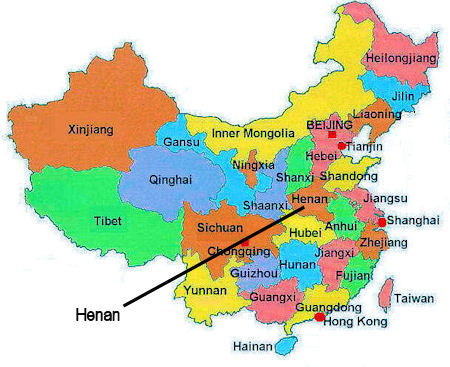
Foxconn Technology Group has opened a new factory in the city of Zhèngzhōu (郑州), my soon-to-be new home, located in Henan Province
 
Foxconn is a multinational, Taiwan-based company which basically acts a a subcontractor, manufacturing electronics and computer products for other companies. The new $100 million factory in Zhengzhou will mainly produce Apple iPhones and is expected to crank out about 200,000 iPhones a day. The plant is starting out with about 900 workers, but is anticipated to grow to as much as 150,000 eventually.

Foxconn has been shifting some of its manufacturing from the southern, coastal city of Shenzhen inland, having already opened a plant in Chongqing and investing in Chengdu.

Foxconn has been the subject of criticism in China after 10 workers committed suicide in its Shenzhen facilities from July 2009 to May 2010, allegedly due to harsh working condition. Foxconn responded by increasing pay twice since then.

Henan Province is the most populous province in China with over 100 million people so it has a substantial workforce.Additionally, the cost of living in Henan is generally lower than coastal cities such as Shenzhen where rapid industrialization has resulted in increasing wages. Foxconn will reportedly pay workers in Zhengzhou the same wage rates as it pays in Shenzhen, so the lower cost of living will benefit Zhengzhou workers. 
 

Aug 3, 2010

Peking Duck in Beijing

Tuesday, August 03, 2010
0

China is a country full of culinary adventures and delights. One of the many famous dishes in China is Peking roast duck (北京烤鸭; Beijing Kaoya). Virtually any tourist group to Beijing will experience a dinner at a restaurant that features roast duck and my recent Belmont University study abroad group was no exception.

Aug 1, 2010

Aftershock Rocks China

Sunday, August 01, 2010
0

No, thankfully not another earthquake in China - just a movie about one. While Hollywood blockbusters have been dominating most of Asia recently (Leonardo DiCaprio's Inception in Japan and Angelina Jolie's Salt in India), a Chinese blockbuster is setting box office records in mainland China since its release this past Thursday.  
Aftershocks (唐山大地震; Tángshān Dàdìzhèn) broke the record for opening day theater revenues by a Chinese film, earning about U.S. $5 million according to China's State Administration for Radio, Film and Television (SARFT). The previous opening day record was by Red Cliff’s (赤壁). Aftershock may have even broken the record for all films (Chinese and foreign) since its producer, Huayi Brothers (華誼兄弟), said it earned $5.32 million (which would have beaten Avatar's opening day earlier this year) and went on to earn $23.5 million in its opening weekend.
Aftershocks revolves around the devastating Tangshan earthquake of 1976 which resulted in over 240,000 deaths. The film's director, Feng Xiaogang, is no stranger to bringing in big bucks (or big yuan more accurately).  Feng's romantic comedy, If You Are The One, starring Ge You and Shu Qi, earned $46 million at the Chinese box office to top the market in 2008.

Aftershocks also holds the distinction of being the first non-English feature film converted to the IMAX format and China has rushed to open addition IMAX screens in anticipation.

Aftershocks is a prime illustration of the potential for continued growth of China's film industry which has been experiencing substantial recent growth. During the first 6 months of 2010, mainland China's gross box office revenue was $714 million and is expected to reach up to $1.5 billion by the end of the year. With a growing percentage of the Chinese population having discretionary income and wanting entertainment and a corresponding increase in the number of theaters in China (including mobile, digital projection facilities for rural areas), massive growth for the Chinese movie industry is likely to continue.

I haven't seen Aftershocks yet since it isn't available in any form in the U.S. so far, but I hope to see it in the near future and will try to post a review.

Jul 16, 2010

Healthcare: China v. USA

Friday, July 16, 2010
0

I don't think I'm alone in my belief that the American healthcare system has become a disaster. We seem to be paying more and more money to receive less and less care. While the much-criticized healthcare reform law recently enacted is in theory intended to deal with some of the problems and abuses that have become prevalent, it remains to be seen whether any significant improvment will result.

I've had personal experiences that have helped form my pessimistic view of American healthcare as well as hearing of similar experiences from other people. For example, a few years ago, I was having some stomach problems that caused a lot of pain. After seeing several different doctors over 2 years and being billed God knows what for the battery of tests (thank God, most of it was covered by insurance), I was no better off. No diagnosis, no cure. So I ended up going to a doctor who practiced traditional Chinese medicine who a friend recommended. After a few sessions of acupuncture, acupressure and drinking some herb tea, I felt a lot better. Although not covered by insurance, the cost was much less than what I paid (not covered by my insurance) for all the fancy modern Western healthcare.

Jul 15, 2010

Belmont in Beijing: Tiananmen Square

Thursday, July 15, 2010
0

Tiananmen Square (天安门广场Tiān'ānmén Guǎngchǎng) in Beijing is the largest city square in the world. Tiananmen literally means Gate of Heavenly Peace and the square adopted the name its northern gate, originally built in 1417 during the Ming Dynasty, which leads into the Forbidden City. Here are some photos I took during a visit in June, 2010 as part of Belmont University's summer study abroad program in China.

Tiananmen is one of Beijing's main tourist attractions

Jul 14, 2010

Namtso Lake in Tibet

Wednesday, July 14, 2010
0

During my recent trip to China with Belmont University's summer study abroad program, we got to spend 4 days in Tibet and on one of those days, we took a 4.5 hour, very bumpy bus ride trip to Namtso Lake (aka Nam Co; Chinese: 纳木错; Nàmù Cuò; English: Heavenly Lake). It was worth the trip since the lake, which is the highest salt water lake in the world (4,718 m), and its surroundings, offer some spectacular scenery.

Jul 13, 2010

Moving to China

Tuesday, July 13, 2010
0

Next month (late August), I'll be moving to China to teach at Florida International College (FIC) of Zhengzhou University so I've decided to start blogging again about some of my experiences. FIC is a partnership between Zhengzhou University and the University of Florida which began in 2007. I'll be there for at least one year and am looking forward to teaching in China, but have a bunch of things to try to take care of before leaving the U.S. (moving internationally is no simple task).

I also spent part of this summer in China with a summer study abroad program from Belmont University (as well as doing some traveling in Thailand, the Philippines and Hawaii). The Belmont groups spent 3 weeks in China visiting Beijing, Zhengzhou, Luoyang, Xi'an, Tibet and Shanghai. It was a great trip and I'll post more about it in future. For now, here's a few photos.


Belmont China group at Terracotta Warriors exhibit in Xi'an


My new pet Yak in Tibet

Jul 9, 2010

Google Not Giving up on Music in China

Friday, July 09, 2010
0

Google, the world's most popular search engine, has had a troubled existence in China, but is still hanging in there to some extent after being given a reprieve of sorts from the Chinese government. While Google dominates the online search business in the U.S. and much of the world, it has been a distant second place in the world's most populous nation.China's leading search engine Baidu is known, among other things, for providing links to lots of unauthorized online music. However, since Baidu merely links to, rather than providing the unauthorized music files, it is not liable for the resulting copyright infringements under Chinese law.


In an effort to compete with Baidu, in 2008, Google introduced a free legal music service in China.The Google Music service is an innovative experiment in an attempt to convert illegal downloading to legal downloading. The music service is operated by Chinese Internet music company Top100.cn, owned in part by NBA basketball star Yao Ming. Top100.cn secured licenses from record companies and music publishers to offer their songs and recordings for download in China. Mainland Chinese Internet users can therefore legally download a huge variety of music for free although Google and Top100.cn hope to eventually make the venture profitable through online advertising (which has so far proven not to be a profitable business model for most music websites).
Google's China operations took a major turn for the worse in March, 2010, when it publicly announced that it would no longer comply with Chinese censorship regulations for online content. However, instead of totally giving up the the Chinese search engine market, Google simply rerouted users in mainland China to its Hong Kong website (although Hong Kong is part of China, it is largely self-governing and therefore not subject to mainland China's censorship regulations).
While rerouting searchers seemed like a clever solution, the Chinese authorities indicated that this still violated Chinese law and that Google's Internet content provider license (which allows commercial websites to operate in China) might not be renewed as a result.In response, Google recently started merely providing a link to its Hong Kong webpage instead of automatically rerouting Chinese Internet searchers. It appears that this change may satisfy Chinese authorities which indicated today that Google's license will be renewed.

Interestingly, in addition to providing a link to its Hong Kong search engine, the google.cn page also provides a link to Google Music which is still operational in China. Despite all the problems Google has experienced, it seems that it is not yet willing to give up on the Google Music service and has accordingly made an additional investment in Top100.cn. Chinese media have reported that both Google and Yao Ming have invested in a second funding for Top100.cn.

Although its impossible to know how all this will turn out, Google's music service is still hanging on even though Google's main incentive in offering the music service (gaining search engine market share in China) has been seriously diminished. Google may hope that if its music search service ultimately becomes profitable in China, it can be introduced in other parts of the world as well. As with most online music business ventures, continued existence is iffy and profitability is only something that can be hoped for in the future.

Jul 8, 2010

James Clavell's Asia Novels

Thursday, July 08, 2010
0

James Clavell was a British author who wrote several novels set in Asia (Hong Kong, Japan and Singapore). Clavell’s interest in Asia was sparked by his actual experiences. He joined the British Royal Artillery at age 16 and fought the Japanese in Malaya where he was wounded by machine gun fire, captured and became a prisoner of war at Changi Prison in Singapore. This could not have been a good experience since Changi was notorious for poor living conditions and the brutal treatment of prisoners by the Japanese. Its therefore somewhat surprising that Clavell’s novel’s generally portray the Japanese in a positive light, especially the samurai culture portrayed in Clavell’s most famous novel, Shogun.

Clavell’s writing style was highly descriptive, enabling readers to visualize exotic places they’ve never been to and know next to nothing about. Although fictional, his novels are partially based on historic events and contain a lot of information about Asian history, culture and Western stereotypes. Although his book are very long (over 1000 pages), they're very east to read and hard to put down once you've started them.
Clavell also lived in Hong Kong in the 1960's where he wrote Tai-Pan, the plot of which involves European and American traders who develop the highly lucrative opium trade with the Chinese in 1841 after the first Opium War. Like all of his novels, Tai-Pan is loosely based on fact; in this instance, Clavell fictionalized the story of Jardine Matheson's beginnings as an opium trader in Hong Kong (Jardine Matheson is still one the the biggest companies in Hong Kong). The book’s main character is Dirk Struan, an extremely ambitious, opium trader who helps found the British colony of Hong Kong and becomes Hong Kong’s "tai-pan" (supreme leader).
Film version of Taipan
Although Struan is a ruthless pirate and opium smuggler, he also has more admirable qualities including loyalty, generosity, openness to cultural differences and willingness to learn from them. While many of the Western characters view the Chinese as inferior human beings, Struan develops much more respect for the Chinese and their culture - learning their way of doing business, having a Chinese mistress who he actually falls in love with and has a half-Chinese son with. Tai-pan paints an exotic and often realistic picture of early Hong Kong, many aspects of which are still present (relentless pursuit of wealth & power, free trade and business-friendly government, horse racing, mixing of Eastern and Western culture) into a highly entertaining adventure/love-story/pseudo-history.
Clavell also wrote a sequel to Tai-pan, Noble House which takes place in Hong Kong during the 1960's. The story of the Noble House business empire, founded by Dirk Struan, picks up with a new tai-pan, Ian Dunross, a descendant of Dirk Struan who has to rescue the family business from mismanagement by partnering with an American millionaire and simultaneously fighting off a competitor descended from Dirk Struan’s enemy in Tai-pan. Noble House became a best-seller and became the basis for a 1988 TV miniseries starring Pierce Brosnan.
Clavell is one of my favorite authors and I've read all of his Asian novels. I recommend them highly for anyone who wants to get a decent introduction to some aspects of Asian history and culture in a very entertaining way. Who knows, it might even lead you to want to know more as it did me (I've since read many books on Chinese history).

Jul 7, 2010

John Rabe: China's Schindler

Wednesday, July 07, 2010
0

In 2006, I visited several cities in China as part of a summer study abroad program with Belmont University. One of the cities we visited was Nanjing, an important city in many parts of Chinese history. One of the darker parts of its history occured when the Japanese invaded in 1937 and brutally massacred several hundred thousand Chinese residents which became known as the Nanking Massacre or the Rape of Nanjing (the title of the book by Iris_Chang). I was shocked, not only by the atrocity itself, but also by the fact that I'd never really heard much about it and didn't realize the extent and exceptionally barbaric nature of the Japanese troops which rivaled if not surpassed the worst atrocities committed by the Nazi's. None of the American students in our group had heard of it at all which seems to illustrate the overly Westernized version of history in the U.S. education system.

I bring this up because I read about a movie produced in Shanghai about John_Rabe, a real-life hero who most Americans have never heard of. Rabe was a German engineer (and Nazi party member) working in Nanjing when the Japanese invaded who refused to leave i n order to help organize a safety zone which protected a quarter of a million civilians. He also appealed to the Japanese and wrote to Hitler trying to stop the brutal treatment inflicted on the Chinese. The photo below shows members of the Belmont group at the Nanjing Memorial Hall.

The German/Chinese co-produced film, The Diaries of John Rabe was shot in Shanghai as well as Nanjing and features an international cast including German actors, Steve_Buscemi (playing American doctor Robert Wilson), Chinese star Zhang Jingchu and Japanese actors Teruyuki Kagawa and Akira Emoto. It was released in 2008 in Germany and China, but to my knowledge hasn't made it to the U.S. There are several other films dealing with the Nanjing massacre so it looks like this chapter of Chinese history may finally get some more international publicity.